Traditional Pan de Muerto with Sugar
Pan de muerto: the bread of the Mexican altar. What its bones mean, why it's scented with orange blossom, and why the buttery dough proofs so long.
Free, no account needed.
Did you cook it? Add your photo
So it lives in your cookbook with your story, not mine.
Add my photo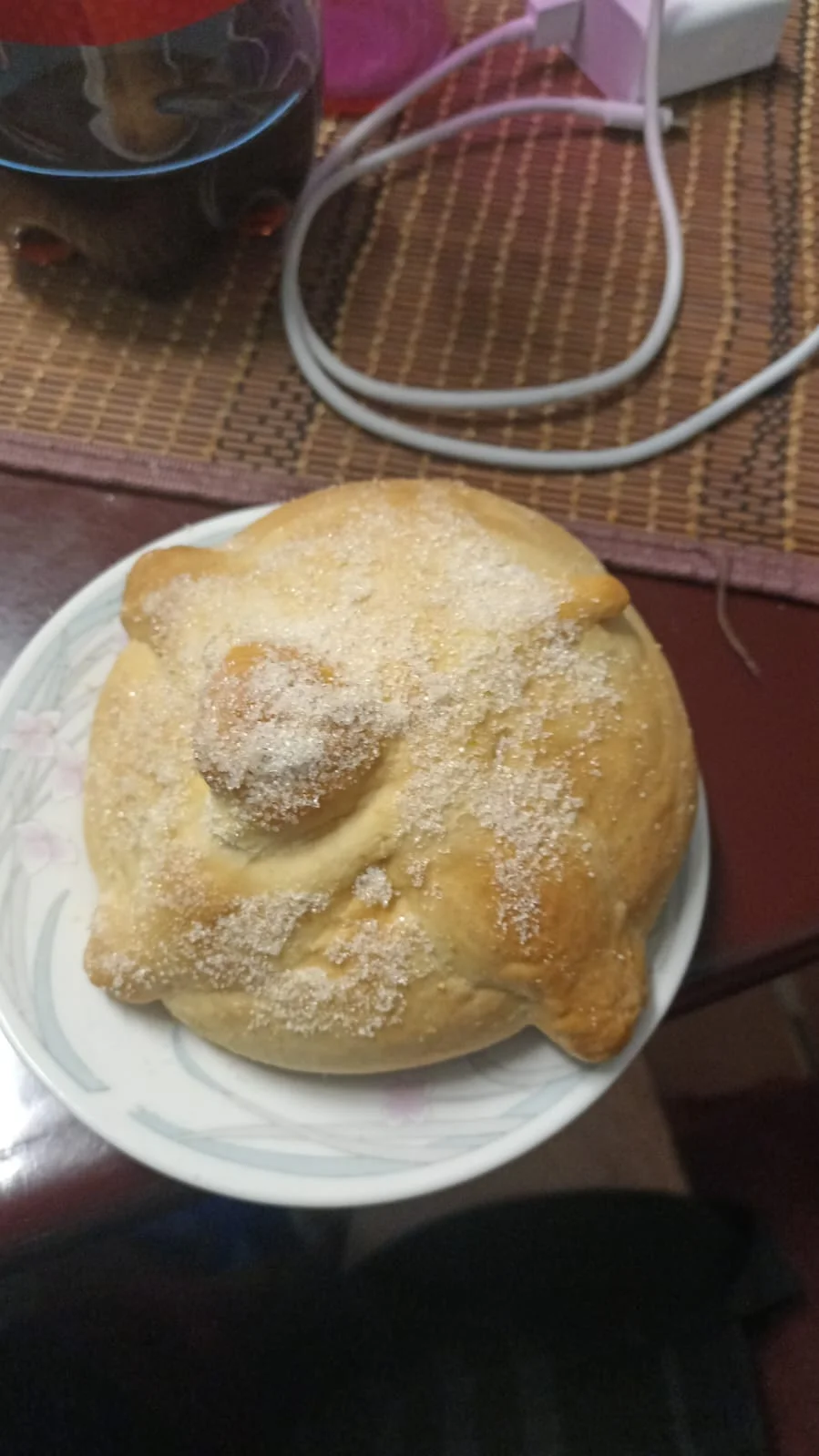
The story behind
This is an enriched bread, heavy with butter and egg, and that dictates the technique. The yeast needs time and gentle warmth to lift such a fatty dough, because fat slows gluten development. So the dough is kneaded at length and proofed until doubled; that patient rest is what yields the soft, airy crumb.
The signature perfume comes from orange-blossom water, which scents the dough with an unmistakable floral sweetness. Fresh from the oven and still warm, the loaf is brushed with butter and rolled in sugar, which clings to the hot surface to form that sweet crust.
The smell of butter and orange that drifts from the oven simply is autumn here. Store it wrapped in a clean cloth; it's at its best the same day.
Instructions
-
1First, mix the yeast with a bit of warm milk, sugar, and flour, and let it ferment until bubbly.
-
2Make a flour well, add the eggs, sugar, butter, and orange blossom water.
-
3Knead with energy, incorporating the yeast mixture until you have a smooth dough that doesn't stick.
-
4Let the dough rest in a warm spot until it doubles in size; be patient, it's worth it!
-
5Shape the buns and don't forget to add the dough 'bones' on top and the central ball.
-
6Bake at 180°C (350°F) until golden brown, brush with melted butter, and roll in sugar while still warm.
Share this recipe
Rate this recipe
Sign in to the app to rate
You might also like
Save this recipe to your Zest
Add photos when you cook it, write your story, and share it with a Moment Card.
Create my free account