Kamaage Udon
Kamaage udon serves noodles straight from the boiling pot, never rinsed. Learn why skipping the cold rinse makes them silkier and warmer.
Free, no account needed.
Did you cook it? Add your photo
So it lives in your cookbook with your story, not mine.
Add my photo
15 min
Japonesa
1 servings
The story behind
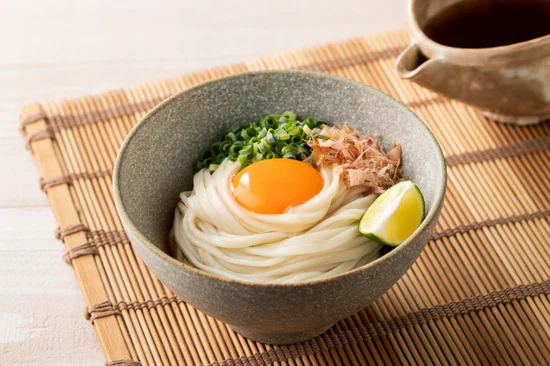
Steam curling off a wooden tub of noodles still warm from the pot — that's the whole idea behind kamaage udon. The name joins kama, the pot, and age, to lift out: the udon is served straight from the boiling water it cooked in, never rinsed cold, ladled into a bowl or wooden vat along with some of that hot, starchy water. It's the oldest and most honest way to eat udon, tied historically to Kagawa on Shikoku island, widely considered Japan's udon capital. Skipping the cold rinse is a deliberate choice. That rinse, standard in many noodle dishes, strips surface starch and chills the strands; here you want the opposite, keeping the heat and that silky coating that makes udon so slippery and soothing. You dip each bite into a concentrated tsuyu of soy sauce and dashi, brightened with scallion and sometimes ginger, while a fresh egg yolk set in the center enriches the broth. It is winter food at its core, comfort announced by the steam before the first sip.
Instructions
-
1Cook the Udon noodles in boiling water until tender but still springy.
-
2Drain the noodles well and place them in a nest shape inside a ceramic bowl.
-
3Using a spoon, create a small well in the center of the noodles and carefully drop in the egg yolk.
-
4Arrange the chopped green onions and the bonito flakes (katsuobushi) on the upper sides of the yolk.
-
5Add the fresh lime wedge to the side of the bowl.
-
6Serve immediately accompanied by hot Mentsuyu sauce to pour over the noodles just before eating.
Share this recipe
Rate this recipe
Sign in to the app to rate
You might also like
🍊
Save this recipe to your Zest
Add photos when you cook it, write your story, and share it with a Moment Card.
Create my free account