Pesarattu
A wholesome, protein-rich, and incredibly popular breakfast crepe native to Andhra Pradesh, India. Unlike regular dosas, this vibrant crepe is crafted from a batter of whole green mung beans (pesalu) and aromatic spices, eliminating the need for overnight fermentation for a quick, earthy meal.
Free, no account needed.
Did you cook it? Add your photo
So it lives in your cookbook with your story, not mine.
Add my photo
35 min
India del Sur (Andhra Pradesh)
4 servings
The story behind
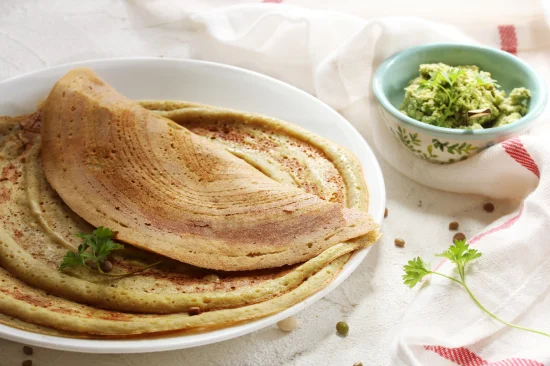
The airy and bright overhead display in the file "Pesarattu.png" beautifully honors the daily breakfast canvas of Southern India. Spread across a clean white plate, these oversized, thin crepes showcase a delicate pale olive-green hue woven with crisp, golden-brown griddle patterns. The top crepe rests folded neatly in half, revealing the classic lacy texture and beautifully paper-thin edges that define a well-made pesarattu. Resting beside the crepes, a lovely mint-green floral ceramic bowl holds a thick, vibrant green coconut-cilantro chutney garnished with tiny herb sprigs, all framed by a rustic red-striped white linen cloth. Historically, when a pesarattu is stuffed with a serving of savory semolina upma, it is famously known as 'MLA Pesarattu'—a legendary variation born in the legislative assembly quarters of Hyderabad. Best enjoyed scorching hot straight from the tawa, ripped apart with bare hands to scoop up bold chutneys.
Instructions
-
1Rinse the whole green mung beans and raw rice thoroughly under running water. Place them into a deep bowl, submerge in plenty of water, and leave to soak for 4-6 hours (or overnight for optimal smoothness).
-
2Once soaked, drain out the water entirely and dump the plumped beans and rice into a high-powered wet blender or food processor.
-
3Add the chopped green chilies, sliced fresh ginger, whole cumin seeds, a pinch of asafoetida, and sea salt directly into the blender.
-
4Pour in about half of the clean water and start blending on high speed. Gradually drizzle in the remaining water as needed until the mixture processes into a velvety, uniform batter with a pourable texture similar to light pancake mix.
-
5Pour the bright green batter out into a mixing bowl. Since whole mung beans do not require fermentation, this batter is ready to use immediately.
-
6Set a non-stick flat crepe pan, seasoned cast-iron skillet, or Indian tawa over medium heat. Flick a few water drops onto the surface; if they sizzle and vanish instantly, your surface heat is correct.
-
7Lightly wipe down the pan surface with a damp paper towel or a halved onion skin to ensure a trace layer of oil.
-
8Ladle a generous, heaped scoop of the vibrant green batter right into the dead center of the hot skillet.
-
9Immediately place the flat back of your ladle onto the center of the batter and swirl outwards in continuous, widening concentric circles to sweep the batter into a wide, uniform disc, mimicking the layout of the file "Pesarattu.png".
-
10Drizzle a teaspoon of vegetable oil or melted ghee all along the outer edges of the crepe and a few drops on top. If using, scatter a handful of finely chopped red onion over the wet surface now.
-
11Cook undisturbed over medium heat for 2-3 minutes. The edges will crisp up, break away from the pan, and the bottom face will showcase gorgeous, deep golden-brown char patches.
-
12Flip-fold the crisp pancake directly in half using a flat silicone spatula, precisely recreating the presentation in the file "Pesarattu.png". Slap onto a plate and serve cracking hot next to fresh coconut chutney or a zesty ginger paste (allam pachadi).
Share this recipe
Rate this recipe
Sign in to the app to rate
You might also like
🍊
Save this recipe to your Zest
Add photos when you cook it, write your story, and share it with a Moment Card.
Create my free account